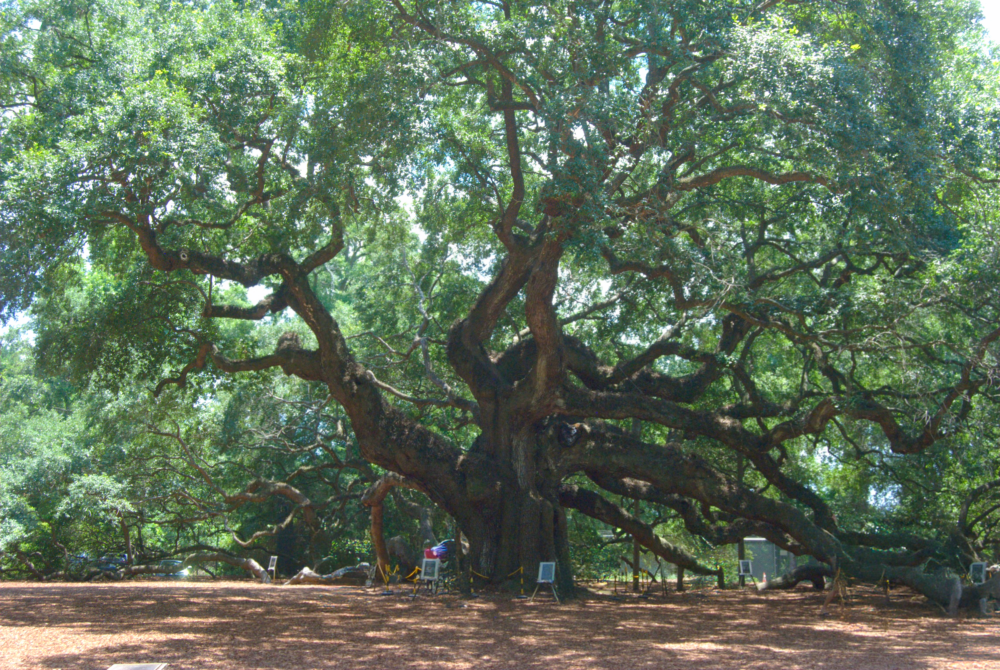
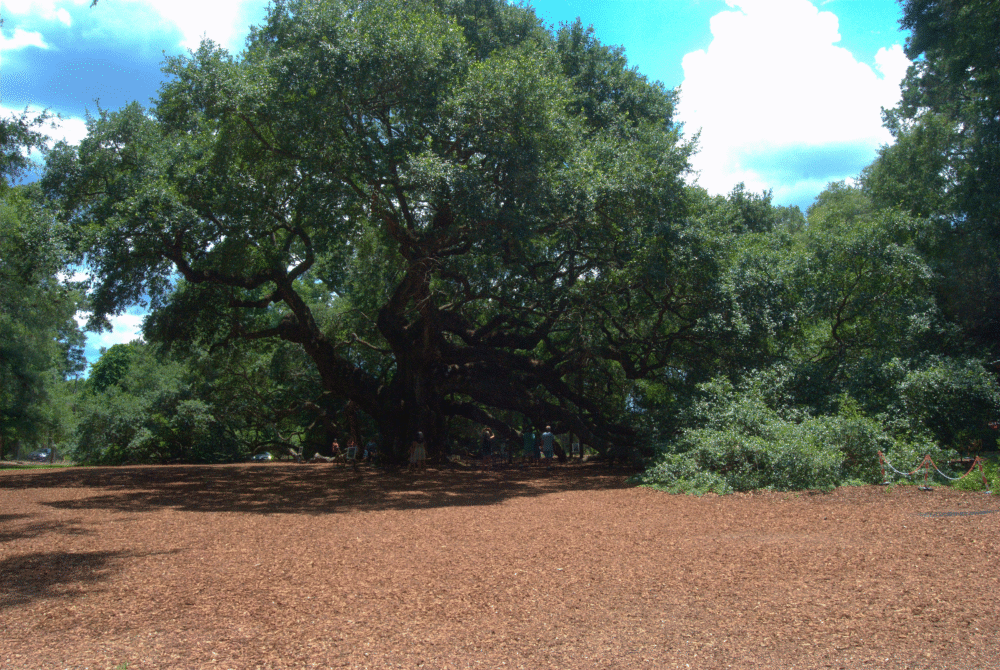
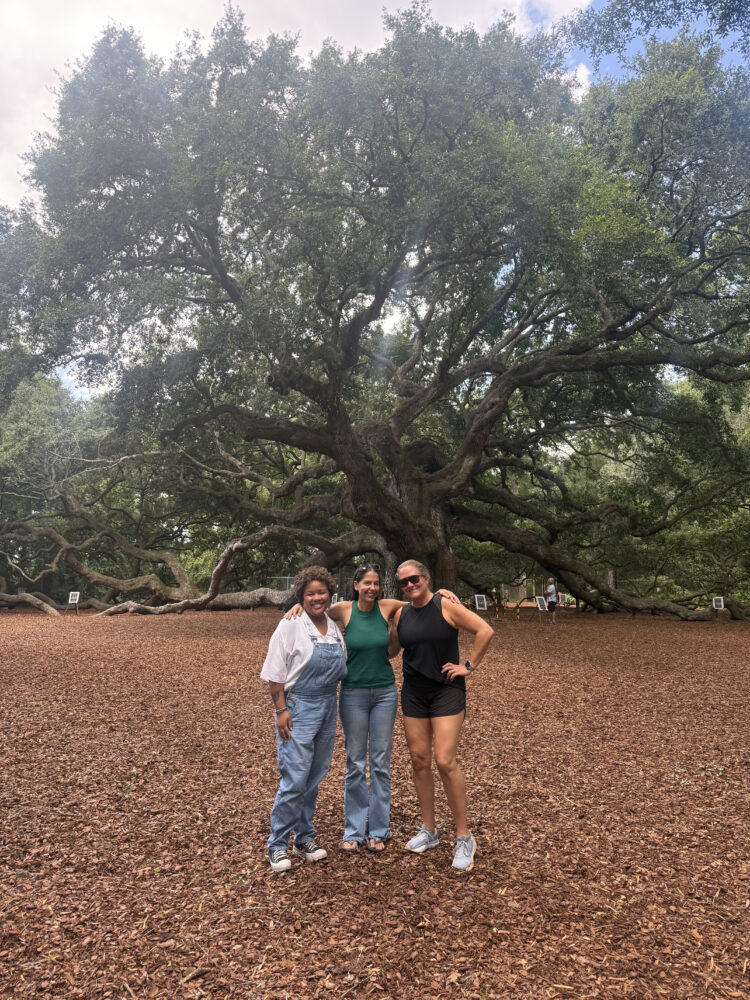
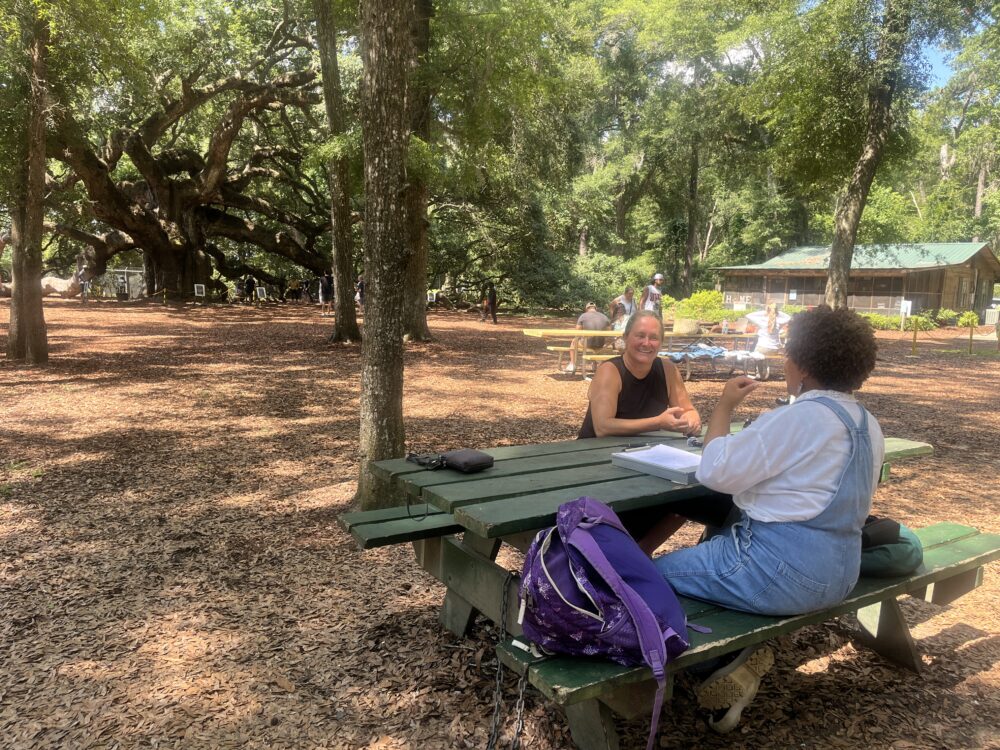
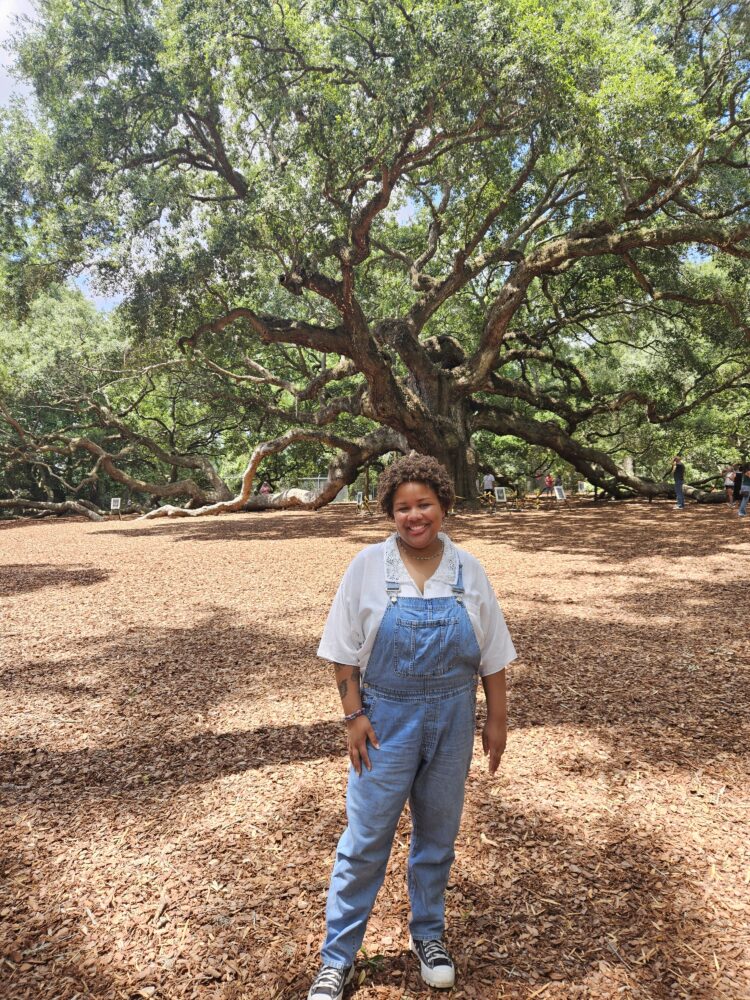
The Angel Oak Tree on Johns Island is one of South Carolina’s most significant living witnesses to the intertwined histories of Native peoples, enslaved Africans, and Black Lowcountry communities. Estimated to be between 400 and 500 years old, this southern live oak has endured centuries of environmental stressors, colonization, plantation agriculture, and community transformation. Long before the arrival of European settlers, the land surrounding the Angel Oak belonged to the Cussoe people, whose stewardship shaped the early landscape. By the 18th and 19th centuries, the Waight and Angel families controlled the property, and more than 100 enslaved Africans labored in the surrounding rice and cotton fields. Their knowledge, skill, and forced labor sustained the plantation economy that defined the region.
After emancipation, the land transitioned from enslaved laborers to tenant farmers still working under the Angel family, reflecting the long arc of exploitation that followed the end of slavery. Yet the Angel Oak also became a place where Black community members created new meaning. Despite its private ownership, the tree’s proximity to the road allowed Black families to gather beneath its branches for rest, recreation, and connection. Civil rights leaders such as Esau Jenkins, Bill Saunders, and Septima Poinsette Clark spent time under the tree, using it as a site for community building, education, and imagination. Clark, who taught on Johns Island between 1916 and 1919, brought her students to the Angel Oak for reading, storytelling, and joy — transforming a landscape marked by violence into a place of possibility.
In the 20th century, the Angel Oak faced threats from development as the land around it became increasingly valuable. Community members, conservation advocates, and local organizations fought to protect the tree and its surrounding ecosystem. Their efforts helped shift the Angel Oak from a privately profited attraction to a protected cultural landmark.
Today, the Angel Oak is entering a new chapter through the stewardship of the Lowcountry Land Trust and the City of Charleston. Their long‑term vision includes a 44‑acre preserve that will safeguard the tree, honor the histories held within its branches, and ensure that future generations can learn from this living archive. The Angel Oak stands as a testament to resilience — of land, of culture, and of the communities who have protected it.