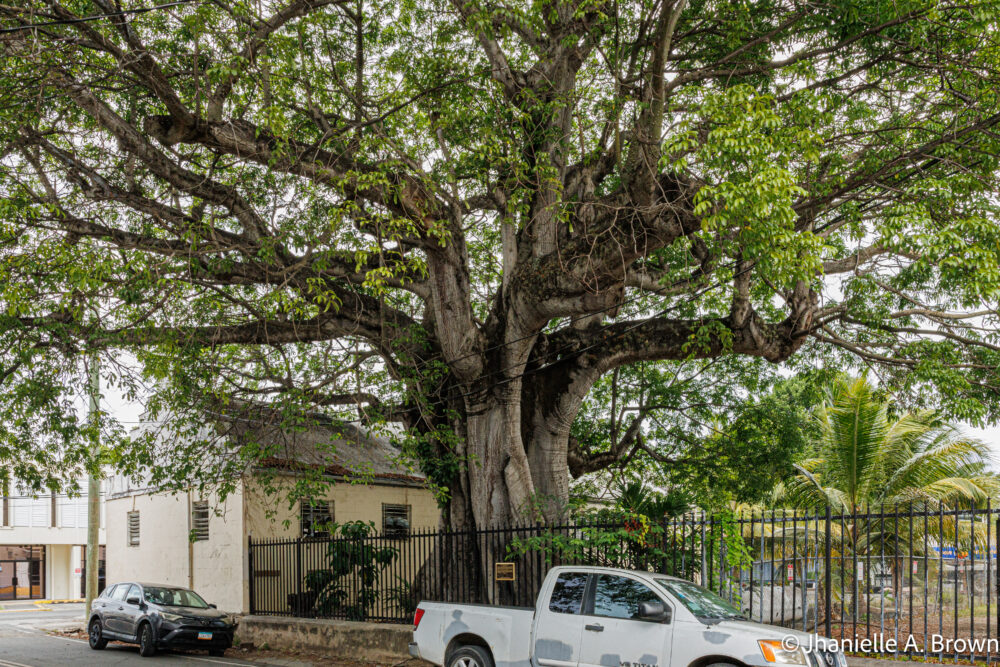
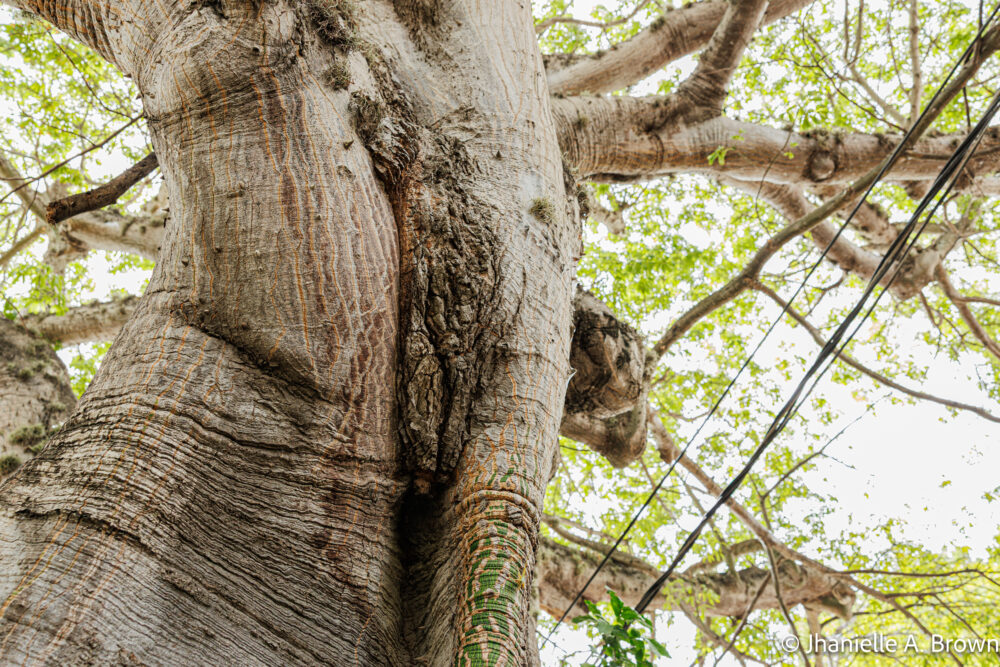
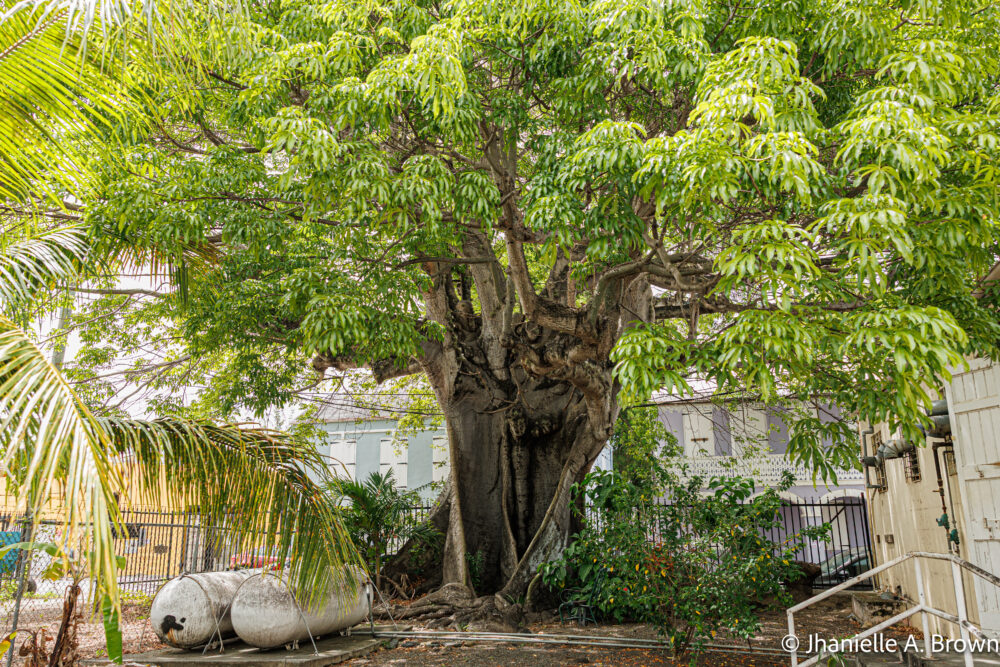
Name of Tree: Kapok Trees in Frederiksted Project Designation: Witness Tree Location: St. Croix US Virgin Islands Species: Kapok tree (Ceiba pentandra) Approximate Age: Unknown Condition: Stable Monument or Marker Present: Yes
Story
Storyteller: Dr. Alicia Odewale
The Kapok or Silk Cotton Tree has a long history across the Global African Diaspora, known for its buttressed wall-like roots, lightweight wood, fluffy pods, and fibrous healing leaves, standing as a living symbol of Black ancestral knowledge and spiritual connection.
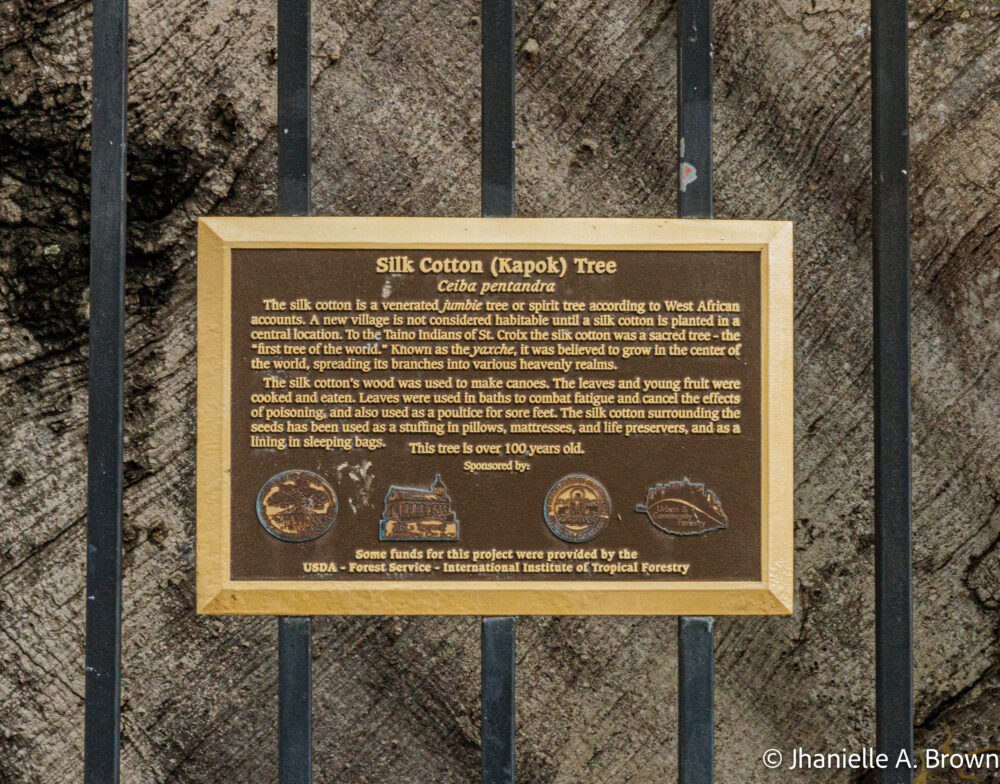
Kapok Trees are commonly called Jumbie Trees in St. Croix because of their longstanding use by Indigenous and African communities for spiritual and medicinal purposes.
There are at least 10 Kapok trees across the island that are over 200 years old, with herbal shrines, carved secret messages, horseshoes, and tributes laid at their roots.
Their long trunks with lightweight, buoyant wood were used to build canoes for escape across the ocean waters, and supported the rise of fishing communities across the VI, while the fluffy Kapok pods stuffed pillows, cushions, and life preservers. Saving many lives in the process.
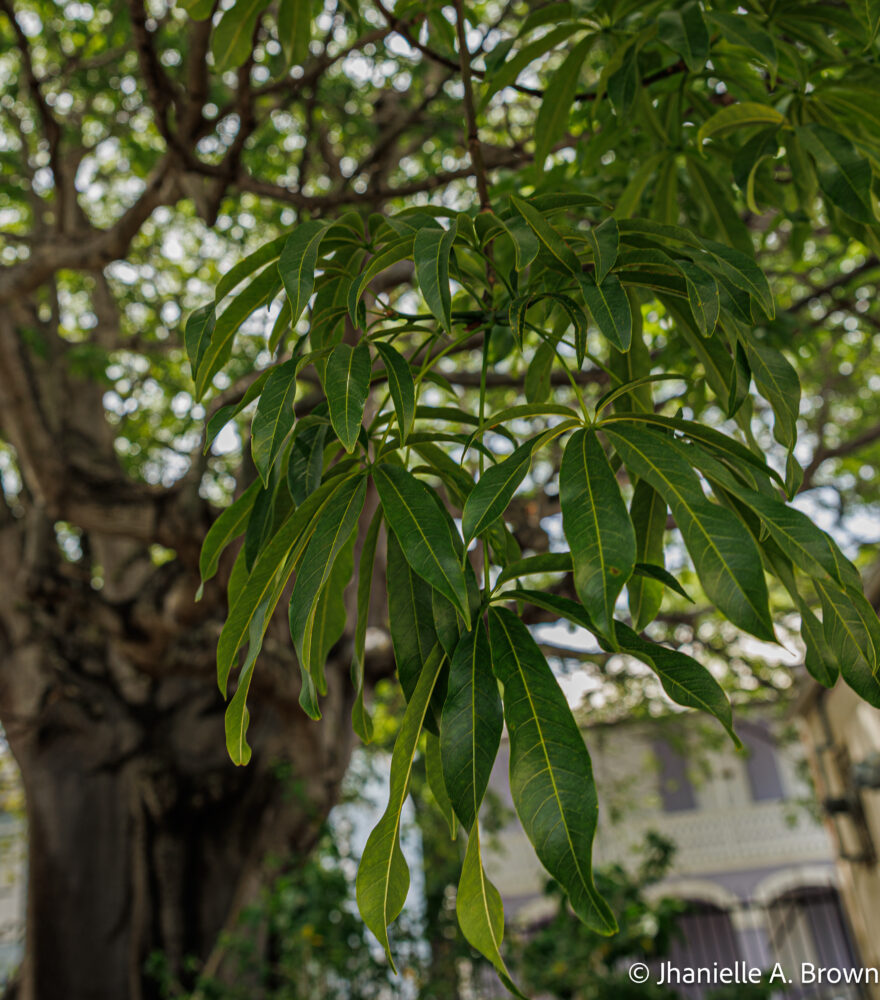
In St. Croix, the bark was brewed into a tea to reduce inflammation and arthritis pain, and ease respiratory distress/asthma. Leaves were applied in baths to ease fatigue or as poultices for sore feet and sprains, and to cancel the effects of poisoning, underscoring the tree’s vital role in traditional healing.
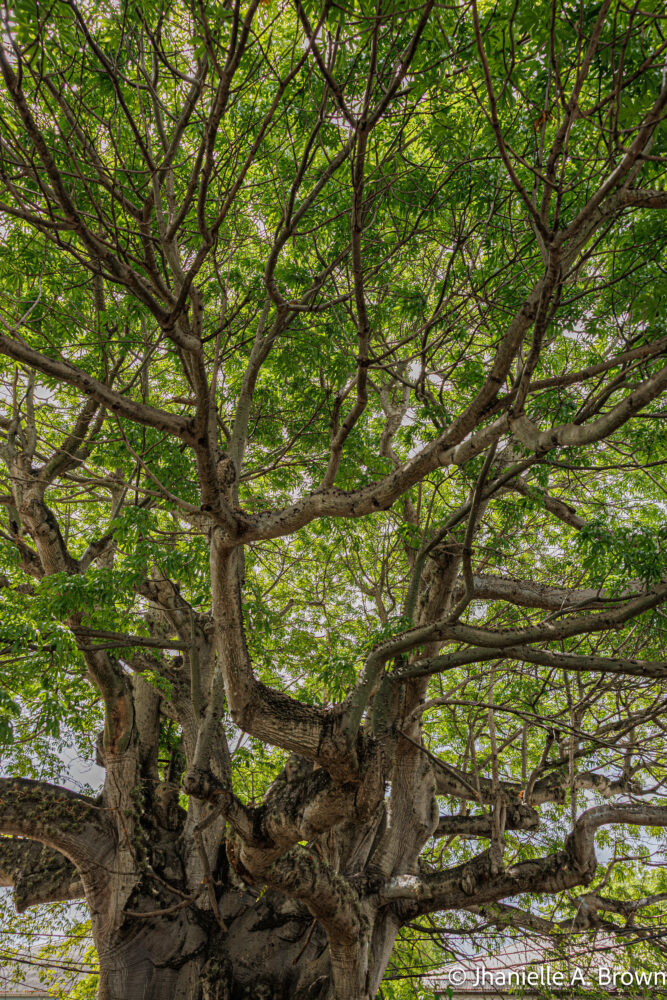
Spiritually, Kapok trees are believed to hold ancestral spirits, linking worlds as their roots rise high above ground, building walls and natural doorways, and their branches rise above the canopy, stretching to receive messages from the heavens back down to earth.