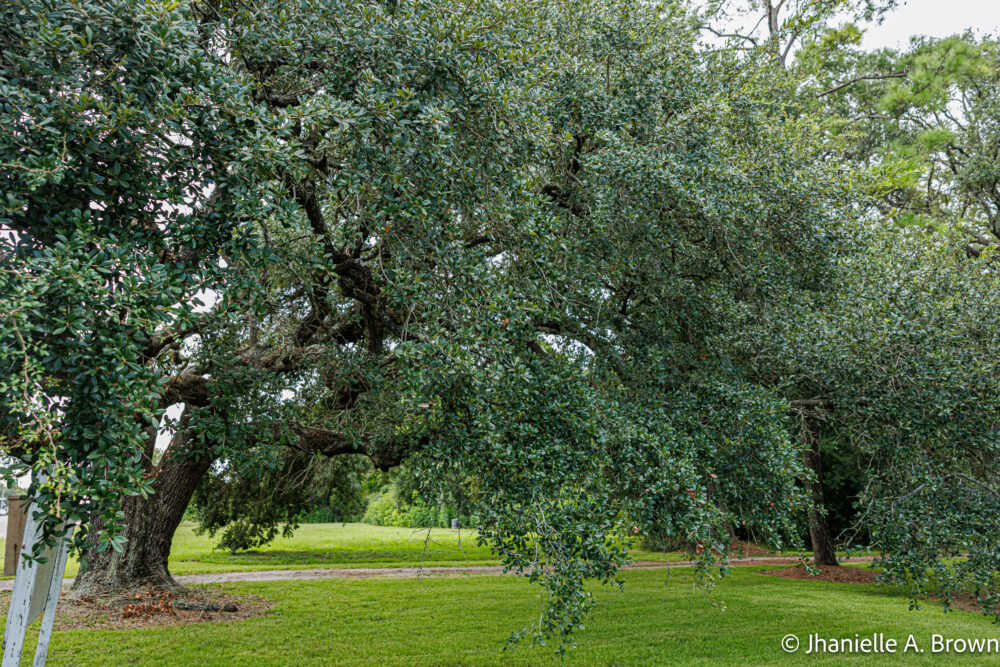
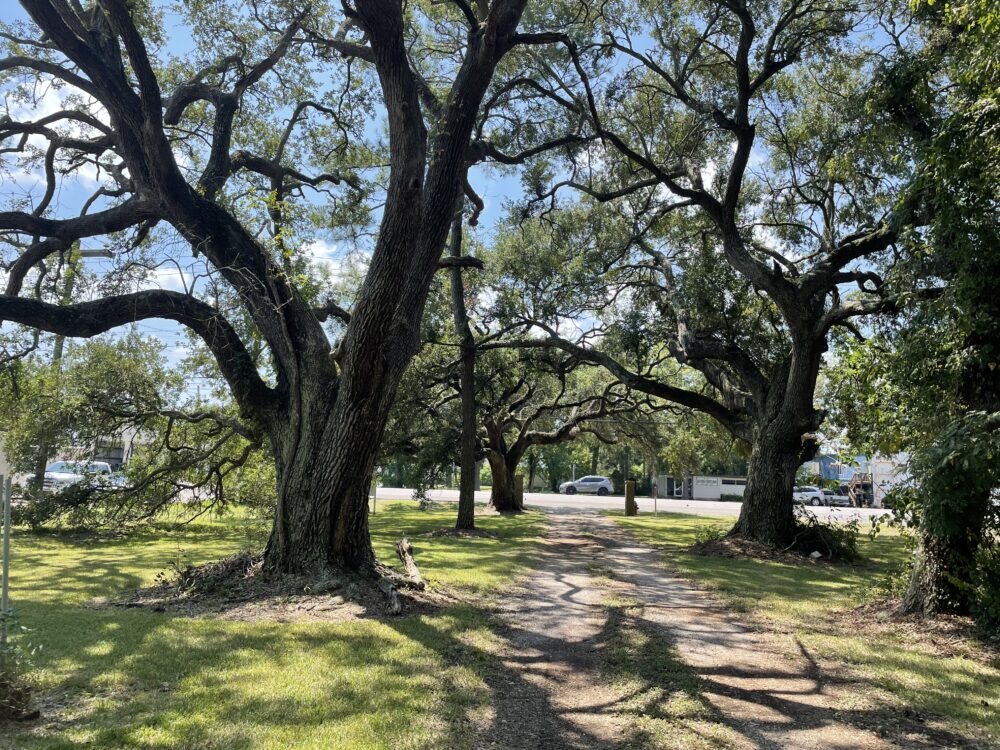
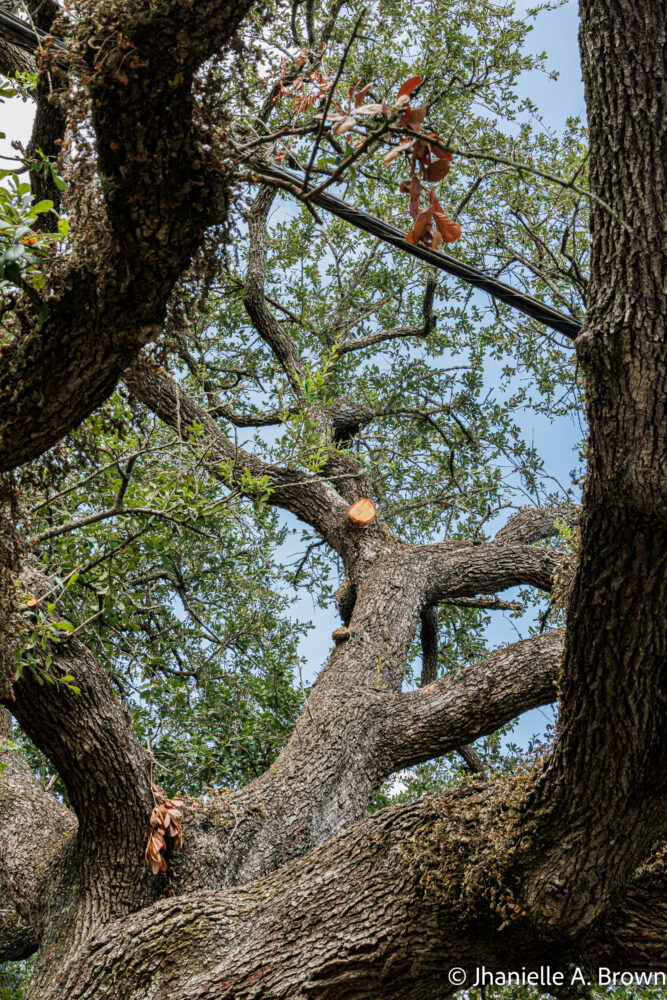
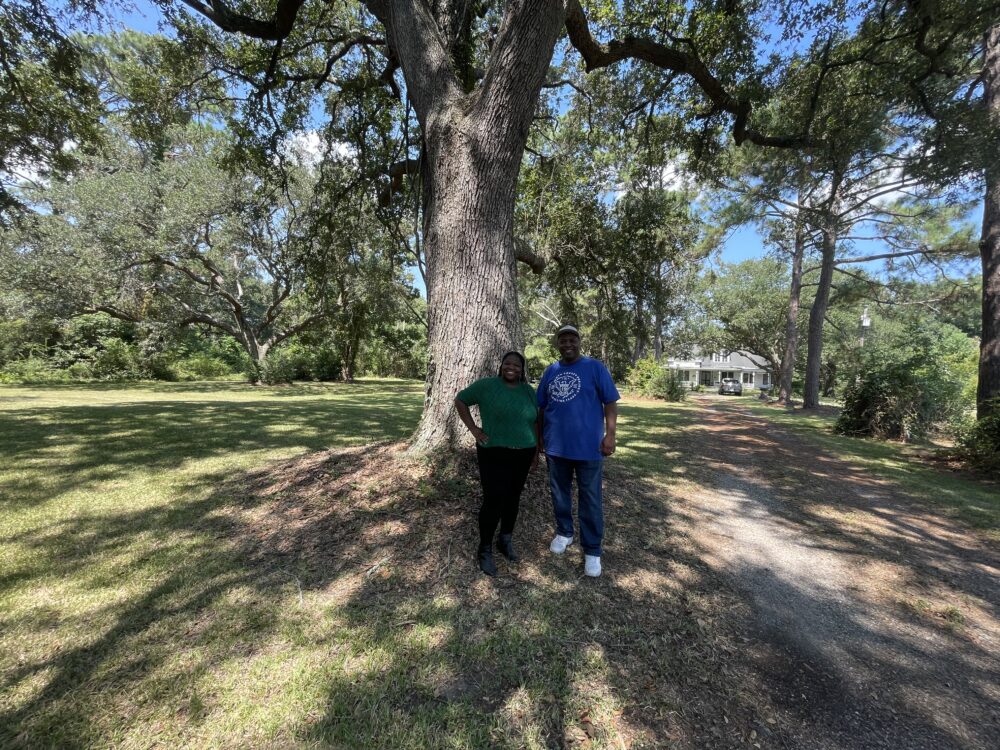
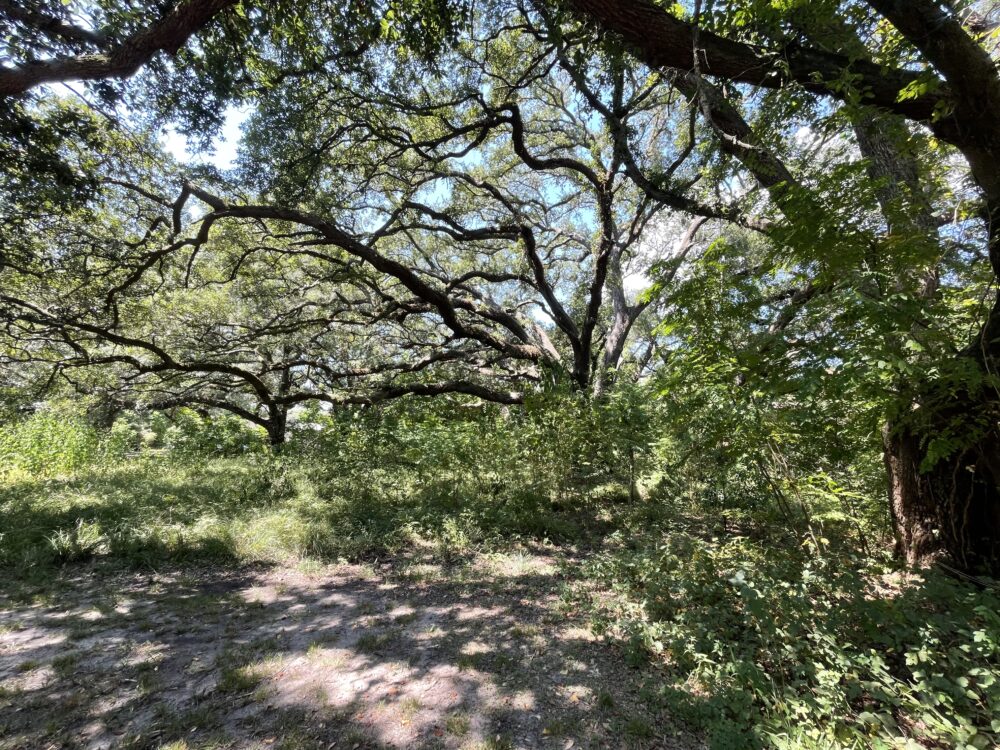
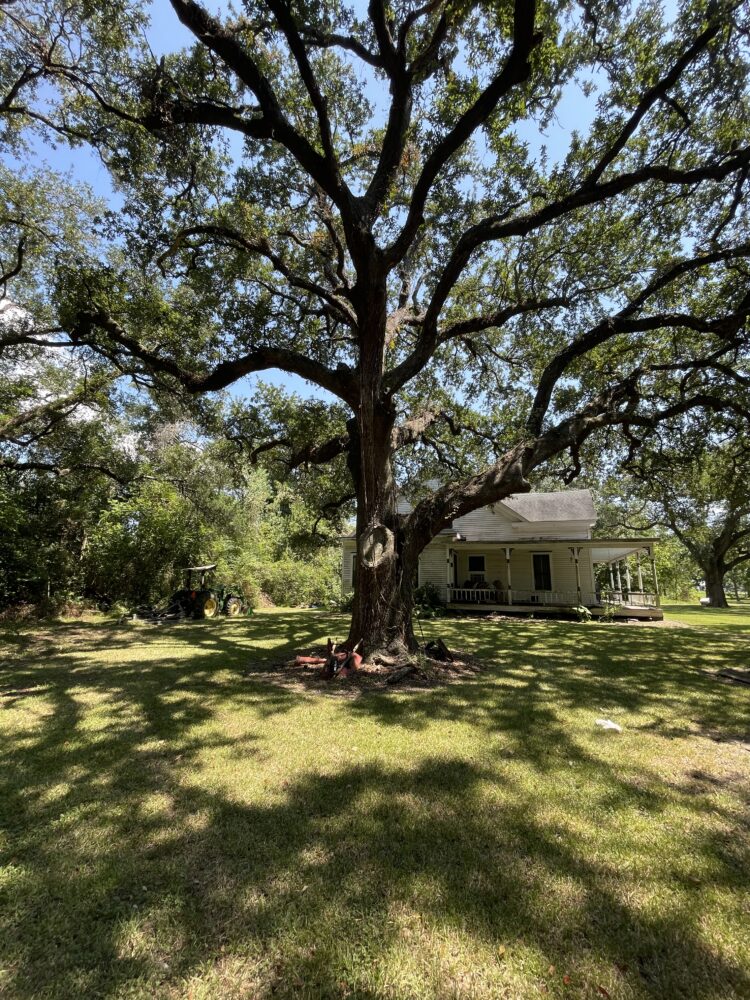
Name of Tree: The Stringfellow Orchards Project Designation: Witness Tree Location: Hitchcock, TX Species: Live Oak (Quercus virginiana), Pine (Pinus sp.), Pecan (Carya illinoinensis), Yaupon (Ilex vomitoria), plus many other Gulf Coast trees. Approximate Age: Unknown Condition: Stable Monument or Marker Present: No
Story
Storyteller: Samuel Collins III
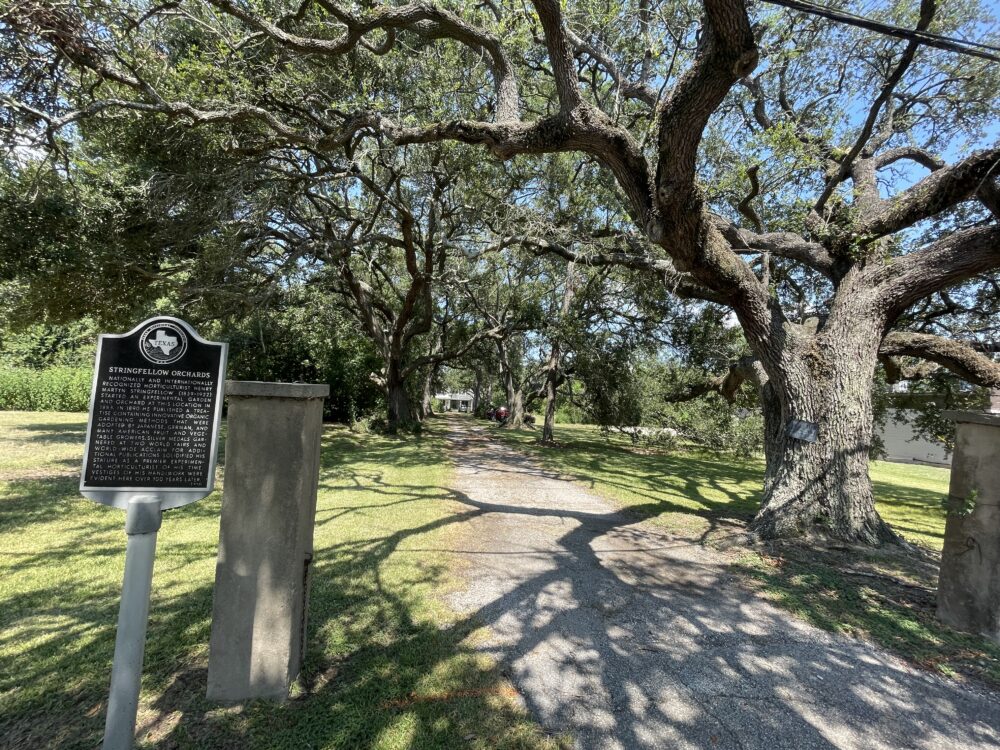
In the summer of 2004, I was drawn to the driveway of Stringfellow Orchards in Hitchcock, Tx by a Texas Historical Commission subject marker that shared the history of the site. Mr. Stringfellow was a world-renowned horticulturalist and former confederate soldier.
To my surprise the property was abandoned and owned by an older couple in the community. The property was nine and a half acres with over thirty Live Oak trees and a 3200 square foot home in desperate need of saving. It is one of the most historic properties in the city.
The owners were in their late 80’s and interested in selling. I was in the middle of changing firms and didn’t think it was a good time to take on such a large renovation project. I remained interested in the history of the property and stayed in contact with the owners.
By the late summer of 2005, I was established at my new firm and followed up with the owners about purchasing the property. I made an offer that they accepted and closed on the property December 15, 2005. Our family was now the owners and stewards of this property.
The family I bought it from had owned the property for 85 years. Almost a century of stewardship. They had a flower shop business for over 50 years and often held church picnics on the property. Old photo albums in the house and a family scrapbook captured the many events in the lives of the people that lived before us.
During my research, I found out that Mr. Stringfellow once employed thirty black men working at the site and paid each one dollar per day when the average wage for laborers was only fifty cents per day. Many other employers were upset because they felt Stringfellow ruined the labor force by overpaying his workers.
The day I closed on the property, I invited many of my family members to come see the property. For several of the elders in the family, it was unbelievable that we had bought the property. A young African American couple was now the owners of this historic site in this small Southern town.
We prayed together and began the work of bringing the property back to life. We did a lot of clearing of the land and restoration work on the house. One of the very first public events we wanted to host was a Juneteenth celebration in June of 2006. With so much work ahead of us, it seemed impossible, but we did it. June 19, 2006 fell on a Monday, so we held a Juneteenth celebration on June 17, 2006 with hundreds of community members.
A site once owned by a Confederate soldier who fought to keep people enslaved was now the site of a freedom celebration. A location that had seen a former Confederate soldier work side by side with free men who were paid for their labor. A site that was owned by one family for almost 86 years.
We continued to have celebrations including Juneteenth, family reunions, weddings, parties, and other events in this space under the trees that stood as silent witnesses to it all. These thirty-plus Live Oak trees, pecan trees, pine trees, and others continue to record the story of the existence of not only the humans that occupy this space but also of every living creature or plant.
The trees clean the air, drink the rainwater, provide shade, food, and a home for the many insects and birds. The trees are nature’s highway for the many squirrels that travel day to day, moving about the property. On any given day, you may see a hawk or owl or blue jay.
Some days I take my shoes and socks off to stand barefoot on the ground, earthing or grounding to connect to the planet. In the quiet, still place of the front yard, I stand like the trees as a witness to this moment. I see them, and they see me not with a physical eye, but a living energy that recognizes we coexist. We need each other to survive. Not just the two beings, but all living things around us.
It is my hope that these trees can remain long after my life has ended to share my story, our story, with future generations. These silent witnesses will speak to new leaders and new owners and new creatures yet to be born. Through many storms and seasons, they have stood the test of time.
If these trees could talk, I think they would say, “I see you, I hear you, I need you, and I am here for you. Let us work together to make the world a better place. If we take care of each other, we will not only survive but thrive.” If the trees could talk, would we listen?